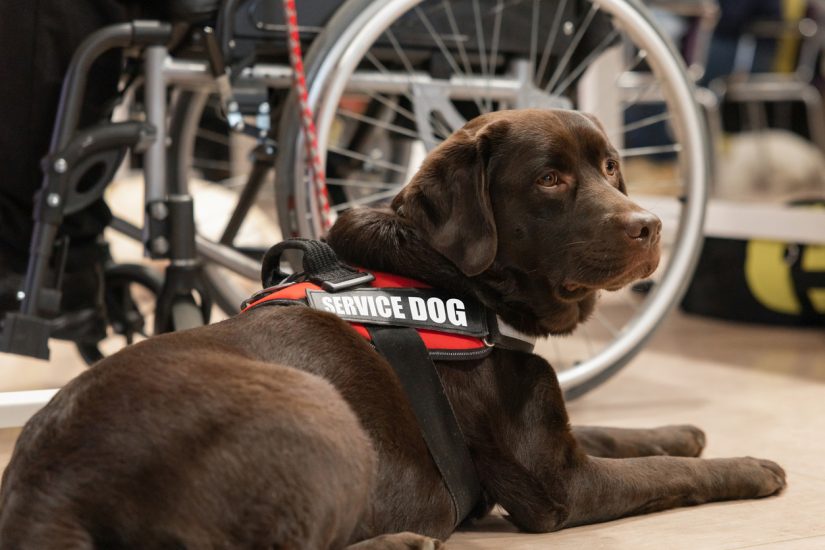
Service animals remain a frequently misunderstood area of the law. Owners and managers of hotels, restaurants, retailers, and other public-facing businesses often ask when service animals must be permitted, what staff may ask, and how to distinguish service animals from emotional support animals. Recent enforcement activity and litigation underscore that missteps can create significant exposure under the Americans with Disabilities Act (“ADA”). Furthermore, it is now becoming commonplace for alleged prospective hotel guests to call the front desk (or in some cases, a call center) prior to booking a reservation to ask service-animal questions and then threaten litigation and/or demand compensation if employees respond incorrectly. Understanding these rules is particularly important because different legal standards may apply depending on whether the issue arises in a place of public accommodation under Title III of the ADA or in the workplace under Title I of the ADA. This article therefore offers a general primer on the key rules governing service animals under the ADA.
What Is a Service Animal?
Under Title III of the ADA, a service animal is a dog or, in limited circumstances, a miniature horse, that is individually trained to perform work or tasks for a person with a disability. The work or task must be directly related to the person’s disability. Examples include guiding individuals who are blind, alerting individuals who are deaf, retrieving objects, assisting with mobility, responding to seizures, or alerting a person to an impending panic attack.
By contrast, emotional support animals, comfort animals, and therapy animals are not service animals under Title III, even though they may provide valuable assistance. These animals do not qualify as service animals because they are not individually trained to perform specific disability-related work or tasks. Thus, it is important to keep in mind that an animal whose sole function is to provide comfort, companionship, emotional support, or a sense of well-being does not meet the ADA’s definition of a service animal.
Where Can a Service Animal Go?
Businesses open to the public such as hotels, restaurants, retail stores, fitness centers, entertainment venues, and similar establishments generally must allow trained service animals to accompany individuals with disabilities in areas open to the public, even if the business has a “no pets” policy. The key point is that a service animal is not a pet. As a result, businesses must modify their polices to allow a service animal to accompany an individual with a disability, unless it would result in a fundamental alteration of the business or jeopardize safe operation. Therefore, regardless of the breed, a business must allow a service animal on its premises and in virtually all public areas, without charging any fee, deposit, or surcharge, even if pets are otherwise prohibited or subject to a pet deposit.
For example, a restaurant with both indoor and outdoor seating may not require a patron with a service dog to sit outside simply because the patron is accompanied by an animal. Nor may the restaurant prohibit a service dog from accompanying their handler in a buffet line, even if other guests have made it clear that they have dog allergies. Likewise, hotels and other hospitality businesses generally must allow service animals in all areas open to guests, including fitness centers, saunas, and pool decks, although service animals are not permitted in the pool itself.
The Two Questions Businesses May Ask
Many businesses mistakenly believe they may require documentation, certification, identification cards, or proof of training. In almost all cases, however, they may not. The ADA limits service-animal inquiries to two questions:
- Is the animal required because of a disability?
- What work or task has the animal been trained to perform?
Businesses generally may not ask additional questions, including questions about the nature of a person’s disability or even the dog’s name, as that dog is working and should not be distracted by seemingly well-wishing employees calling the dog by name. Businesses also may not require medical documentation or demand proof that the animal has been certified, registered, or trained as a service animal, nor can they demand a demonstration of the tasks the service animal can perform.
When Can a Service Animal Be Excluded?
Although the ADA broadly protects the use of service animals, that protection is not unlimited. A business may ask that a service animal be removed where there is a legitimate reason to do so, including when (i) the animal is out of control and the handler does not take effective action to control it; (ii) the animal is not housebroken; or (iii) the animal’s presence creates a legitimate safety hazard, such as a dog entering a sterile operating room or a restricted predatory/prey area in a zoo. Even when removal is appropriate, the business generally must still give the individual an opportunity to obtain goods or services without the animal present.
Service Animals in the Workplace: A Different Analysis
The rules become more nuanced when service animals or emotional support animals arise in the workplace. Unlike Title III, the ADA’s employment provisions in Title I do not contain specific service-animal regulations. Instead, an employee’s request to bring a service animal to work is typically evaluated as a request for a reasonable accommodation. Employers should engage in the interactive process and assess the request individually, including whether the animal would enable the employee to perform essential job functions and whether allowing it would create an undue hardship or legitimate safety concern.
Employers should avoid reflexively denying these requests and should carefully consider whether they can be granted. In recent years, the Equal Employment Opportunity Commission (EEOC) has pursued claims alleging that employers unlawfully rejected service-animal requests without adequately engaging in the interactive process.
The analysis may also differ for emotional support animals in the employment context. Although an ESA generally is not a service animal under Title III, allowing one into the workplace to accompany an employee may qualify as a reasonable accommodation under Title I depending on the circumstances and the employee’s disability-related need. Employers therefore should not deny an ESA request solely because the animal does not meet the Title III definition of a service animal. Instead, they should engage in the interactive process, evaluate the request individually, and determine whether the accommodation can be provided.
Practical Steps for Employers and Businesses
Organizations can reduce their legal risk by taking several proactive measures:
- Review and update service-animal policies.
- Train front-line employees and managers and even call center representatives on the distinction between service animals and emotional support animals.
- Ensure staff understand the limited inquiries that may be made.
- Establish a process for evaluating workplace accommodation requests involving service animals.
- Consult counsel before denying a request that implicates disability rights laws.
As service animals become more common, businesses and employers that understand the applicable legal requirements will be better positioned to avoid discrimination claims and provide equal access to individuals with disabilities.