On March 23, 2026, President Trump’s new Assistant Secretary of Labor for OSHA David Keeling held what he described as the first in a series of live informational sessions from OSHA. For this inaugural session, Assistant Secretary Keeling started the conversation with an introduction to the new “OSHA CARES” program. He then took questions from the audience through a moderator.
Throughout the session, Assistant Secretary Keeling emphasized a broader, more modern vision for OSHA—one that maintains its enforcement role while expanding its impact as a proactive resource, partner, and solutions-driven agency. The discussion centered on the newly launched OSHA CARES initiative, as well as OSHA’s modernization efforts, and strategies to better reach underserved employers and employees alike.
Here are some key takeaways from this informative discussion on what stakeholders can expect from OSHA under the leadership of Keeling:
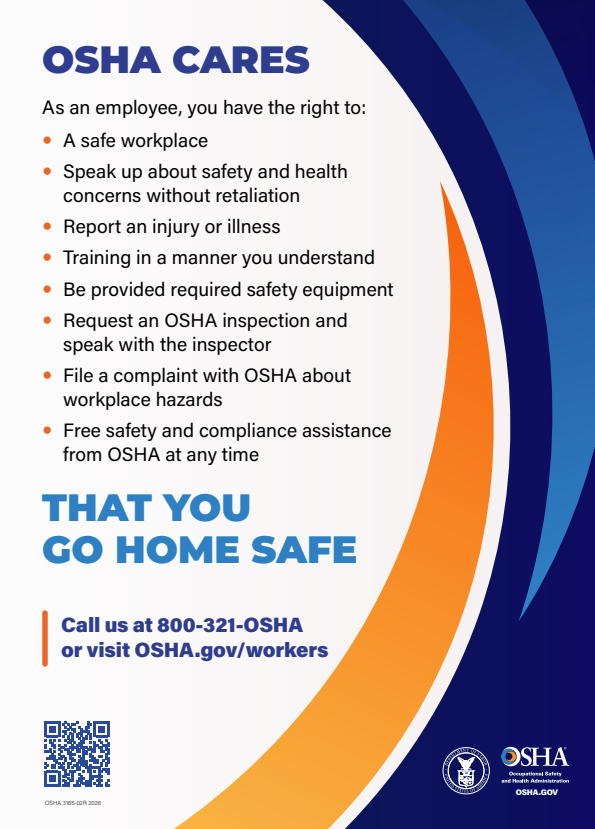
1. OSHA CARES & Rebranding Initiative
- OSHA is undergoing a rebranding effort centered on the OSHA CARES program. The goal is to reinforce OSHA’s identity not just as an enforcement agency, but also as a resource for employers.
- Key components include:
- A new website and updated communications strategy.
- New posters (with QR code access to resources) replacing or supplementing traditional postings:
- Simplified, plain-language messaging to improve accessibility
- OSHA CARES aligns with the concept of “Safety Champions”, particularly targeting small and medium-sized businesses. For a more in-depth look at “Safety Champions,” see our recent blog post here.
- OSHA CARES also complements existing programs, such as the Voluntary Protection Program (VPP) and the Safety and Health Achievement Recognition Program (SHARP). While VPP and SHARP focus on exemplary safety and health management systems, OSHA CARES is designed to provide assistance to businesses (especially small and medium-sized businesses) to help them meet federal workplace safety requirements through a proactive approach to safety.
2. Continued Commitment to Enforcement
- OSHA will remain an enforcement agency—this is non-negotiable.
- However, enforcement will be more balanced with engagement and education:
- Inspectors are encouraged to leave employers with practical tools or guidance at the end of inspections
- Continued focus on identifying and addressing “bad actors”
- OSHA CARES is positioned as complementary to enforcement, not a replacement.
- This initiative is geared toward expanding compliance assistance and ensuring that all employers are aware of available resources, such as the On-Site Consultation Program and the letters of interpretation found on OSHA’s website.
3. Shift Toward a Holistic, Solutions-Based Approach
- OSHA aims to move toward a “solutions business” and “abatement-focused” model:
- Helping employers fix issues, not just cite them
- Engaging stakeholders even outside formal rulemaking or mandates
- Keeling emphasized the importance of hearing from all sides (employers, workers, industry groups).
4. Modernization & Use of Technology (Including AI)
- OSHA is taking an aggressive and practical approach to modernization, including:
- Artificial intelligence for:
- Overcoming language barriers
- Enhancing risk assessments
- Supporting predictive analytics using near real-time injury/illness data
- Moving beyond traditional lagging indicators (recordkeeping data)
- Artificial intelligence for:
- Going forward, employers can expect that inspectors may be equipped with new tools, such as risk assessment resources to leave with employers at the end of an inspection
5. Expanding Outreach & Partnerships
- Strong emphasis on improving communication and coordination, especially with:
- Small and medium-sized businesses, with targeted, electronic resources
- Rural and underserved communities
- State plans (12 states exploring alignment with CARES)
- Small Business Administration (SBA), unions, and industry groups
- OSHA is leveraging:
- Social media
- Partnership programs
- Training grants (e.g., Susan Harwood Program)
6. Workforce & Program Expansion
- OSHA is looking to increase staffing (first round is approximately 108 positions, next round will have more tech folks).
- Expansion of Special Government Employee program:
- Safety professionals serving as mentors/advisors to businesses
- Opportunity to engage private safety consultants
- Need to improve incentives for participation
- Alliance Program
- As industry leaders, safety consultants should also look to become partners with OSHA through the Alliance Program to help OSHA share a consistent, coordinated message.
7. Rethinking Safety Culture
- Keeling challenged the traditional concept of “safety culture,” instead emphasizing:
- Embedding safety into core business operations
- Making safety a central, non-negotiable priority, even during economic downturns
- Leaders must be the “loudest voice in the room” on safety
8. Strategic Vision & Bigger Role for OSHA
- OSHA recognizes a broader national health and safety crisis and wants to:
- Play a larger leadership role, even without new regulations
- Be a first voice on safety issues, not just a reactive enforcer
- The agency aims to extend its reach and influence beyond traditional oversight limits.
Key Takeaways:
OSHA under Assistant Secretary Keeling is positioning itself as a dual-function agency:
- Firm on enforcement, especially for serious violators
- Expanded as a proactive partner, leveraging technology, outreach, and practical tools to drive real-world safety improvements
If you are interested in exploring some of OSHA’s new offerings, such as the Safety Champions Program, or participating in Conn Maciel Carey’s Employers OSHA Modernization Coalition to have a seat at the table as OSHA addresses old, outdated or unnecessarily burdensome standards, processes and interpretations, please contact Rachel Graeber or any of the attorneys in Conn Maciel Carey’s national OSHA & Workplace Safety Practice.
Categories
Share This
Related People