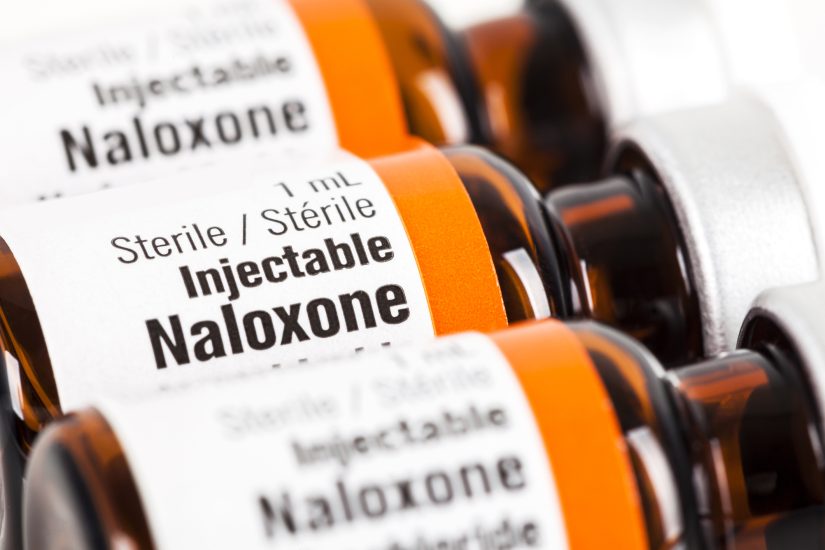
The state of New York recently enacted legislation that will require employers that are already federally mandated to maintain first aid supplies in their workplaces to now include an opioid antagonist with those first aid supplies. See NY Labor Law § 27‑f.
The original bill, Senate Bill S5922‑A, was enacted on December 13, 2025, and subsequent amendments were passed by way of Assembly Bill A9453 at the request of Governor Hochul. Specifically, the Governor secured agreement with the New York Legislature to amend the Bill to:
- clarify that opioid antagonists must be kept in the workplace, but not in every individual first aid kit;
- ensure consistency between this law and other existing opioid overdose prevention programs;
- clarify what is meant by “opioid antagonist,” by expressly incorporating the definition set forth in NY Public Health Law § 3309, which is “a drug approved by the Food and Drug Administration that, when administered, negates or neutralizes in whole or in part the pharmacological effects of an opioid in the body,” and is limited to “naloxone and other medications approved by the department for such purpose”; and
- require the New York State Department of Labor to issue regulations addressing workplace training and quantities of the antagonists that must be maintained, and to give employers time to comply.
Governor Hochul signed the amended bill on February 13, 2026, and the law will take effect on December 13, 2026.
Coverage Under New York Law § 27-f
New York’s new workplace opioid overdose prevention law applies to all private employers in the State that are required by an OSHA standard to maintain first aid kits at their workplaces. Specifically, the law provides:
All employers that are federally mandated by the United States Occupational Safety and Health Act of 1970 (Public Law 91-596) and Safety and Health Standard promulgated thereunder to have first aid supplies readily available for the treatment of all injured employees must have an opioid antagonist available for use in providing first aid or emergency treatment at the workplace.
The amendment (A9453) also clarifies that the definition of covered “employer” includes “any person, corporation, limited liability company, or association employing any individual in any occupation, industry, trade, business, or service” and excludes “the state, any political subdivision of the state, a public authority, or any other governmental agency or instrumentality thereof.”
The law creates inherent compliance challenges, because its trigger – a mandate by OSHA standard to maintain first aid supplies – is not always so clear cut. OSHA’s standard for first aid training in general industry, 29 CFR 1910.151(b), provides:
In the absence of an infirmary, clinic, or hospital in near proximity to the workplace which is used for the treatment of all injured employees, a person or persons shall be adequately trained to render first aid. Adequate first aid supplies shall be readily available.
Similarly, in the construction industry, 29 CFR 1926.50(c) provides:
In the absence of an infirmary clinic, hospital, or physician, that is reasonably accessible in terms of time and distance to the worksite, which is available for the treatment of injured employees, a person who has a valid certificate in first-aid training from the U.S. Bureau of Mines, the American Red Cross, or equivalent training that can be verified by documentary evidence, shall be available at the worksite to render first aid.
The basic purpose of these standards is to assure that adequate first aid is available in the critical minutes between the occurrence of an injury and the availability of professional medical services for the injured employee. However, the phrases “in near proximity” and “reasonably accessible in terms of time and distance to the worksite” are not defined in the regulatory text. Guidance from OSHA provides some parameters about what “near proximity” means, but it also varies depending on the industry. OSHA explained in a 2007 Interpretation Letter that it has long interpreted the term ‘near proximity’ to mean that emergency care is available within no more than 3-4 minutes from the workplace. Medical literature similarly establishes that, for serious injuries such as those involving respiratory or cardiac arrest or uncontrolled bleeding, first aid treatment must be provided within the first few minutes to avoid permanent medical impairment or death. Accordingly, in workplaces where serious accidents such as those involving falls, suffocation, electrocution, or amputation are possible, emergency medical services must be available within 3-4 minutes, if there is no employee on the site who is trained to render first aid and/or insufficient first aid supplies on site. However, OSHA also specifically recognized that in some workplaces, such as offices, where the possibility of such serious work-related injuries is less likely, a longer response time of up to 15 minutes would be reasonable.
Evaluating Obligations under NY Labor Law § 27‑f
It is not so simple for employers to ascertain the full scope of their obligations under this new law. Employers will first need to evaluate their workplace to determine whether there is a higher risk of serious incidents based on the work activities and equipment operated at the workplace. Then, depending on the type of workplace and the potential risk for serious injuries, employers will need to determine if emergency services (i.e. hospitals, clinics, EMS, infirmary, clinic, etc.) are near enough to respond timely, which, based on a sliding scale, is somewhere between 4 and 15 minutes.
For example, a manufacturing facility that could not reasonably expect emergency services to be able to respond on site within 3-4 minutes is required by OSHA to maintain first aid materials, would need to also maintain Narcan or another approved opioid antagonist with its first aid supplies (but not necessarily within its first aid kits). On the other hand, office settings have a little more leniency, and would not be required to maintain Narcan in the workplace unless the employer could not reasonably expect emergency services to be able to respond to the workplace within 15 minutes. The challenge for many employers is that they likely fall somewhere in the middle; i.e., the degree of hazard present in the workplace may not be clear enough to meet the 3-4 minute response standard and/or it may not be so clear how quickly emergency services can respond. That is to say, there is no clear framework to determine with certainty when OSHA’s first aid requirements under 29 C.F.R. 1910.151(b) are triggered, and therefore, when New York’s new obligations to provide and maintain Narcan in the workplace are triggered.
Categories
Related Practice Areas
Share This
Related People