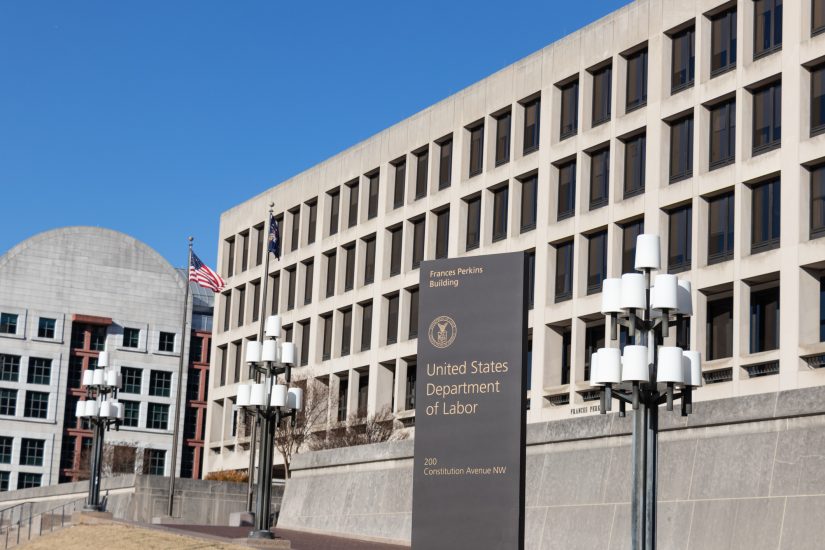
Over the last several months, the United States Department of Labor (“DOL”) has been quite active in pursuing rulemaking efforts to address regulations that had been changed or rescinded during the Biden Administration. Specifically, the DOL has published proposed rules on the classification of independent contractors and determining joint employment. It also recently put out a technical amendment to the regulations on White-Collar Exemptions related to the salary threshold used to determine applicability of the exemptions. Although each effort is different in its focus and effect, each impacts an employer’s obligations to workers under the Fair Labor Standards Act; thus, understanding each is essential in effectively ensuring compliance.
Independent Contractor Rule
In 2024, the DOL promulgated a final rule expanding the factors considered in determining the status of a worker as an employee or an independent contractor that had been narrowed during the first Trump administration. In essence, the DOL returned to a totality of the circumstances approach based on a six-factor test that made it more likely a worker would be viewed as an employee versus an independent contractor. But, on February 26, 2026, the DOL changed its approach again by proposing a rule that it asserts will “make it easier to properly differentiate between employees with the protections under the Fair Labor Standards Act and those workers who work as independent contractors.”
Specifically, the DOL published a proposed rule that reverts back to a very similar framework as the final rule promulgated by the first Trump Administration, relying heavily on two core factors in determining independent contractor status – (1) the nature and degree of control over the work and (2) the individual’s opportunity for profit or loss.
The DOL has taken the position that these two core factors go directly to the economic independence or dependence of the worker. Per the proposed rule, these two factors should be considered first, and if both point toward the same classification (either employee or independent contractor), there is a substantial likelihood it is the accurate classification for the individual. In the rule, the DOL is also proposing that the three additional economic dependence, or economic reality, factors described—skill, permanence, and whether the work is part of an integrated unit of production—serve as additional guideposts but are less probative in the analysis (and, in some cases, may not be probative at all). As a result, these “economic reality” factors are very unlikely, either individually or collectively, to outweigh the combined probative value of the two core or primary factors when together they point toward the same classification.
The proposed rule also applies its analysis to the Family and Medical Leave Act (FMLA) and the Migrant and Seasonal Agricultural Worker Protection Act (MSPA). The proposed rule and its reliance on two core factors would expand the number of workers likely to be classified as independent contractors under the FLSA, FMLA, and MSPA. If workers are classified as independent contractors, the obligations of the FLSA, including overtime requirements, do not apply to those workers. But, even under this new test, the DOL will analyze how the workers are treated in practice versus any contractual language that may govern the relationship, so employers should carefully review a worker’s role in the context of these factors, particularly the two core factors. Employers should also be aware that some states, courts and other Agencies, like the National Labor Relations Board, may apply different frameworks in analyzing independent contractor status, creating some additional uncertainty in worker classification.
Joint Employer Rule
On April 23, 2026, the DOL published a Notice of Proposed Rulemaking addressing the joint employer relationship. This rulemaking is meant to refresh joint employer guidance, which has been lacking since the DOL rescinded the rule it had previously passed in 2020 during the first Trump Administration after certain of its provisions had been vacated in litigation. Although the proposed rule largely relies on the framework for determining whether multiple entities are considered joint employers of an employee, it makes some changes to address the concerns raised by the court.
Per the 2026 proposed rule, joint employer status can be established through vertical or horizontal joint employment. Vertical joint employment occurs where two or more entities may benefit from an employee’s work, but only one, the primary employer, employs the worker. As to vertical joint employment, the proposed rule identifies four factors impacting the economic realities of the vertical joint employment analysis, i.e., whether the other, higher-tier entity:
- hires or fires the worker(s).
- supervises and controls the worker’s work schedule or conditions of employment to a substantial degree.
- determines the worker’s rate and method of pay; and
- maintains the worker’s employment records.
The analysis requires consideration of the totality of the circumstances – none of the factors is solely determinative of the joint employer relationship.
Distinguishing itself from the 2020 Rule, this proposed rule does not require actual exercise of control to find a joint employment relationship but recognizes that exercised control is more relevant to determining if the entity is a joint employer than reserved control that is rarely, if ever, used. When using the four-factor test, the proposed rule explains that indirect control will be considered when, for example, “the potential joint employer directs the intermediary employer’s exercise of control over the employee.” Per the proposed rule, the DOL can also consider other factors that relate to control or potentially economic dependence; however, the proposed rule indicates those are likely to be relevant only when the four factors point to different conclusions.
In addition, the DOL identifies circumstances that do not make finding joint employment more or less likely, such as operating as a franchisor or contractual provisions addressing and requiring compliance with general legal obligations or health and safety standards.
Horizontal joint employment focuses on the association between two or more business entities and addresses circumstances in which an employee works separate hours for each within the same workweek. Under the proposed rule, the analysis must also address the totality of the circumstances, and the DOL lists three scenarios that generally represent sufficient association for two entities to qualify as joint employers of the worker:
- an arrangement exists between them to share the workers’ services;
- one of the employers is acting directly or indirectly in the interest of the other employer in relation to the worker; or
- two employers share control of the worker, directly or indirectly, because one employer controls, is controlled by, or is under common control with the other.
While the proposed rule attempts to restore increased certainty to inter-employer relationships by reestablishing a joint employment analysis reminiscent of the 2020 Rule, legal challenges to any final rule are likely, and in a judicial environment less deferential to agency interpretations, courts may continue to implement their own tests, instead of adopting the DOL’s.
Technical Amendment to the White-Collar Exemptions
Lastly, on May 13, 2026, the DOL published a technical amendment reinstituting the applicable regulations governing the White-Collar Exemptions (i.e., executive, administrative, professional, etc.) under the FLSA to those promulgated in 2019 during the first Trump Administration. The DOL has asserted that it has authority to take this action as an amendment to the regulations, as opposed to engaging in notice and comment rulemaking, because the final rule that replaced the 2019 regulations in 2024 had been vacated by two U.S. District Courts in Texas at the end of 2024. Specifically, the 2024 regulations had been found to go beyond the authority of the DOL as the courts determined they effectively displaced the FLSA’s duties test by setting a salary threshold that made the duties portion of the analysis obsolete. In the Preamble to the Final Rule restoring the 2019 regulations, the DOL explained that because it is simply “updating the CFR to reflect the courts’ vacatur of the 2024 rule” and not exercising any of its own discretion, it is permitted to replace the operative regulations through a technical amendment under applicable law. The DOL also clarified that the Rule would take immediate effect.
Publishing this technical amendment has no real impact on employers as the threshold salary levels prescribed by the 2019 regulations – $684 per week/$35,568 per year ($107,432 per year for certain highly compensated employees) – have been applicable since the courts vacated the 2024 Final Rule. The amendment, however, provides more certainty for employers regarding the application of the White-Collar Exemptions under the FLSA and clarifies that the current DOL does not intend, at least at this time, to alter the current salary threshold levels.
Although this final change has taken immediate effect, the first two rules on independent contractor status and joint employment are still at the proposed rule phase and will not become operative unless and until they are promulgated as final rules. The DOL has received comments on the independent contractor rule but is still accepting comments on the joint employer rule until June 22, 2026. We will certainly keep you apprised of any updates, including promulgation of any final rule.